
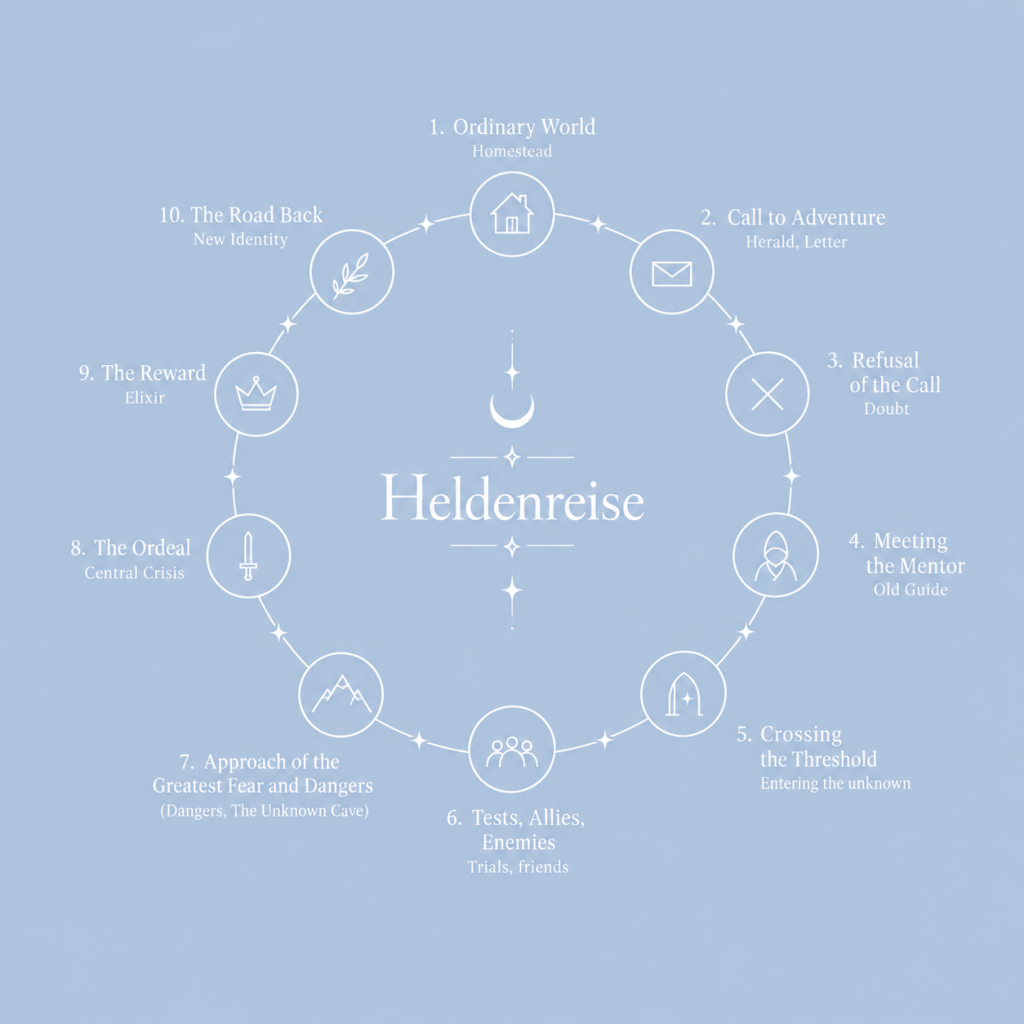
Today, we’re looking at one of the most influential storytelling structures: the hero’s journey. ⛰️
This narrative framework has been the backbone of countless beloved stories, like:
- “The Lord of The Rings”*
- “Eragon”
- “Harry Potter”
- “Star Wars”
*Unpaid advertising due to name mention: This post is not sponsored or paid, it’s just my personal recommendation.
But what makes the hero’s journey so compelling and how can you use it for your stories? 🤔 Let’s find out!
What is the hero’s journey? ⛰️
The hero’s journey is a narrative template that describes the typical adventure of the archetype known as “The Hero”. ✨
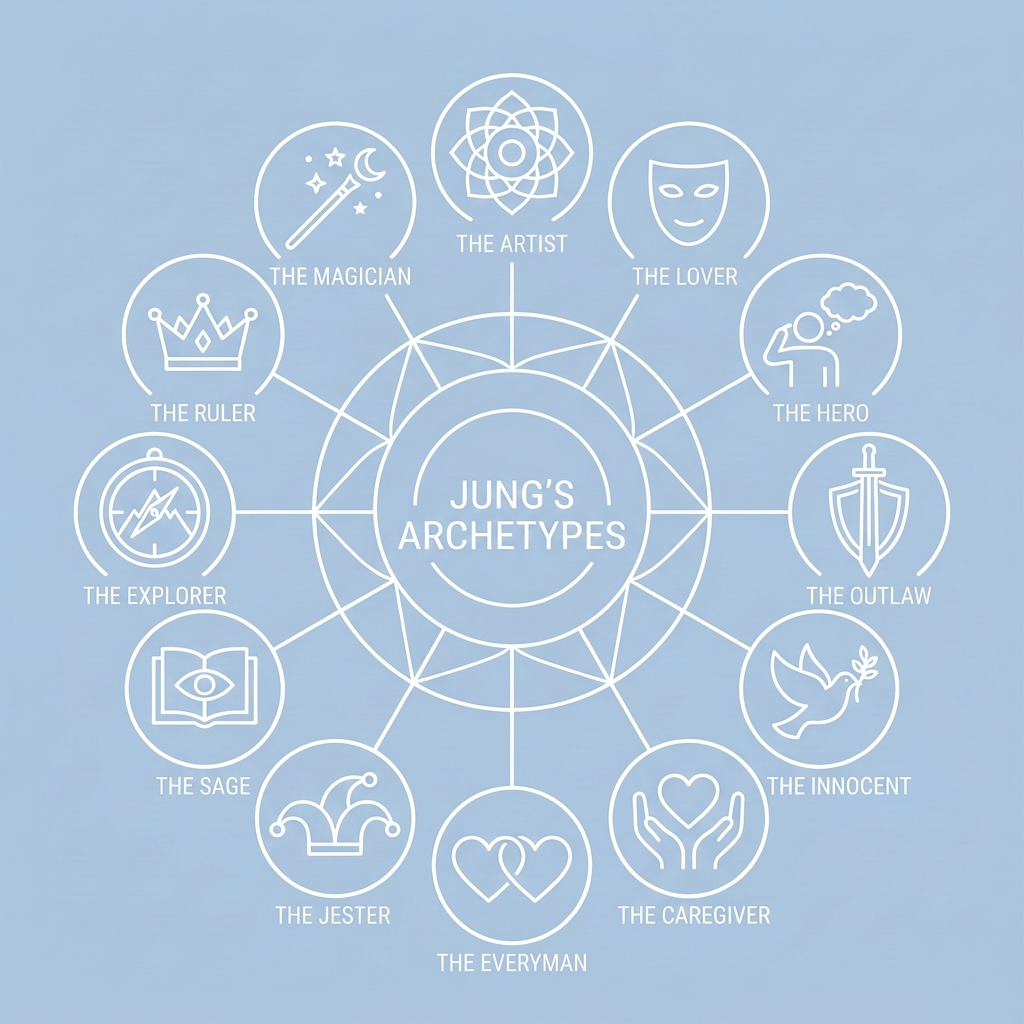
There are 12 archetypes if you’re following the theory of Carl Gustav Jung that you can use to plan your story and create multi-dimensional characters. I will dedicate a separate post to that, but I already did posts for each archetype on my tiktok you can check out right now.
But for now we keep looking at “The Hero”. 🦸🏽
In this case, the Hero is our main character and their journey is divided into several specific stages, each representing a crucial part of the Hero’s transformation and growth: 🌱
The key stages of a hero’s journey:
- the ordinary/known world: this is where the Hero’s journey begins. It’s the Hero’s normal day life before the adventure starts. This stage sets the context and helps readers understand the Hero’s background, their motivations and their beliefs. 🏠
- the call to adventure: the Hero is presented with a challenge or quest that disrupts their ordinary world. 💥 This call can come in many forms, such as a message, a prophecy, a disaster, or a mysterious figure. 🔮
- refusal of the call: often, the Hero initially refuses the adventure due to fear to doubt. This hesitation highlights the risks involved and the Hero’s internal conflict. Also, it creates tension. 😱
- meeting the mentor: the Hero encounters a Mentor who provides guidance, wisdom, or magical aid, helping them overcame their hesitation and prepare for the journey ahead. 👩🏻🏫
- crossing the threshold: the Hero commits finally to the adventure and leaves the ordinary world behind, entering the unknown and often dangerous world. 🌋
- tests, allies, and enemies: in this stage, the Hero faces various trials and makes friends. These experiences help the Hero to grow stronger. 🔥
- approach of the greatest fear and dangers: The Hero approaches the central ordeal of the journey. This stage represents the Hero’s descent into the darkest part of the story, where they face their greatest fears and enemies. 🐉
- the ordeal: the Hero confronts a significant enemy or challenge, coming in often with facing death or deep crises. This ordeal is the climax of the journey, where the Hero’s true character is tested. 😢
- the reward: after surviving the ordeal, the Hero claims a reward. This could be a treasure, knowledge, or getting back with a loved one. ❤️🩹
- the road back: the Hero begins the journey home. 🏠
Why is the Hero’s Journey that powerful?
The Hero’s Journey resonates with readers because it mirrors the universal experience of growth and transformation. 🌱 We all face challenges, encounter mentors, and undergo personal trials in our own lives. That’s familiar but also interesting. ✅
By following the Hero’s Journey, writer can create stories that tap into these deep, archetypical patterns, making their narratives more relatable. 🖋️
Final thoughts 💌
The Hero’s Journey is a powerful tool for any writer. 🔥 By understanding and utilizing this timeless narrative structure, you can create stories that captivate and inspire your readers.
So next time you’re plotting a story, consider the Hero’s Journey as your guide! 📝
Happy Writing, your Katharina. 🦋



 Katharina Romes